Page 11
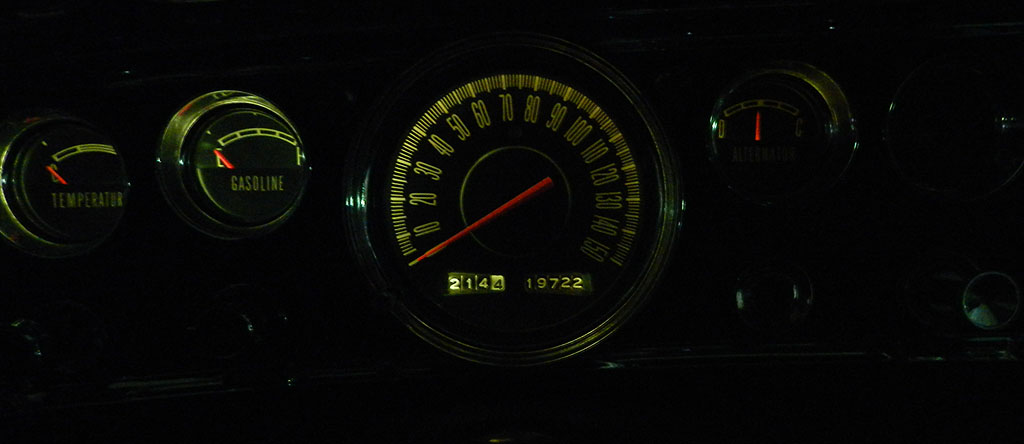
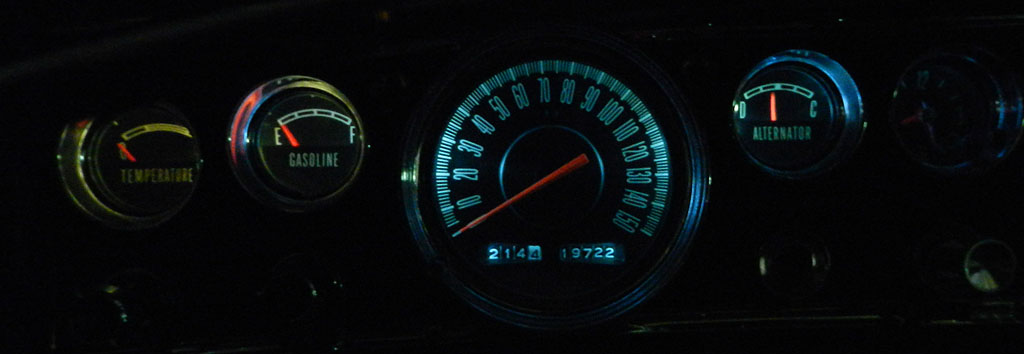
I wasn't satisfied with the
brightness of the dash dauges so I looked into LED lamps.
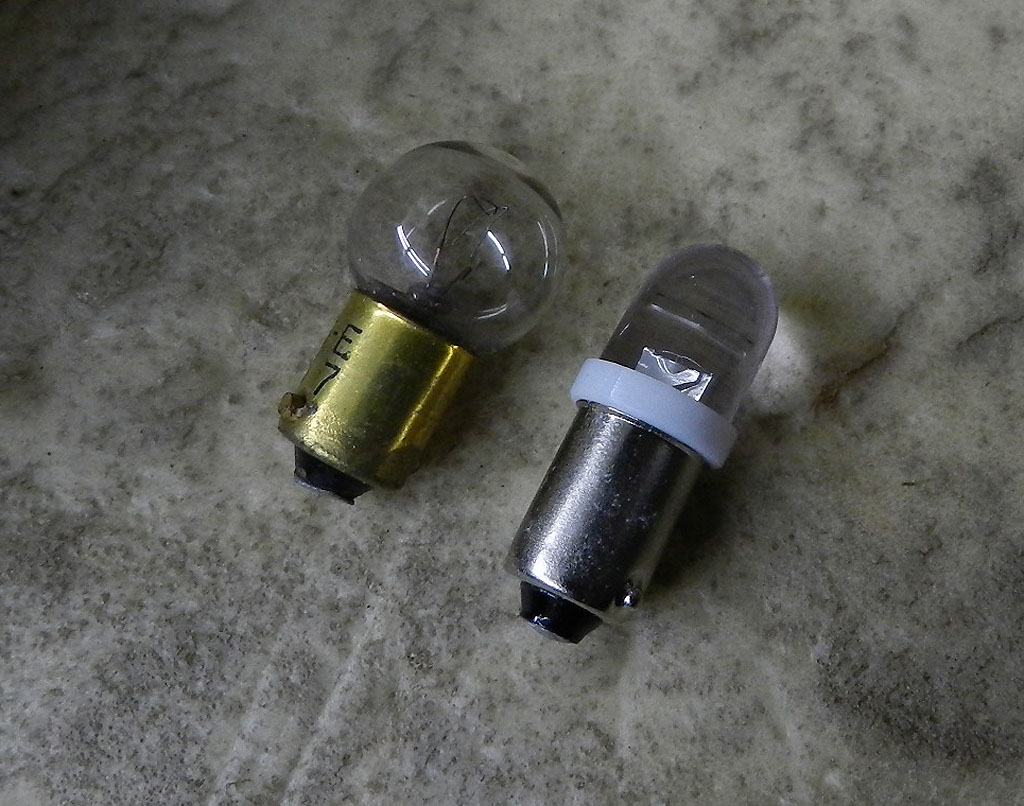
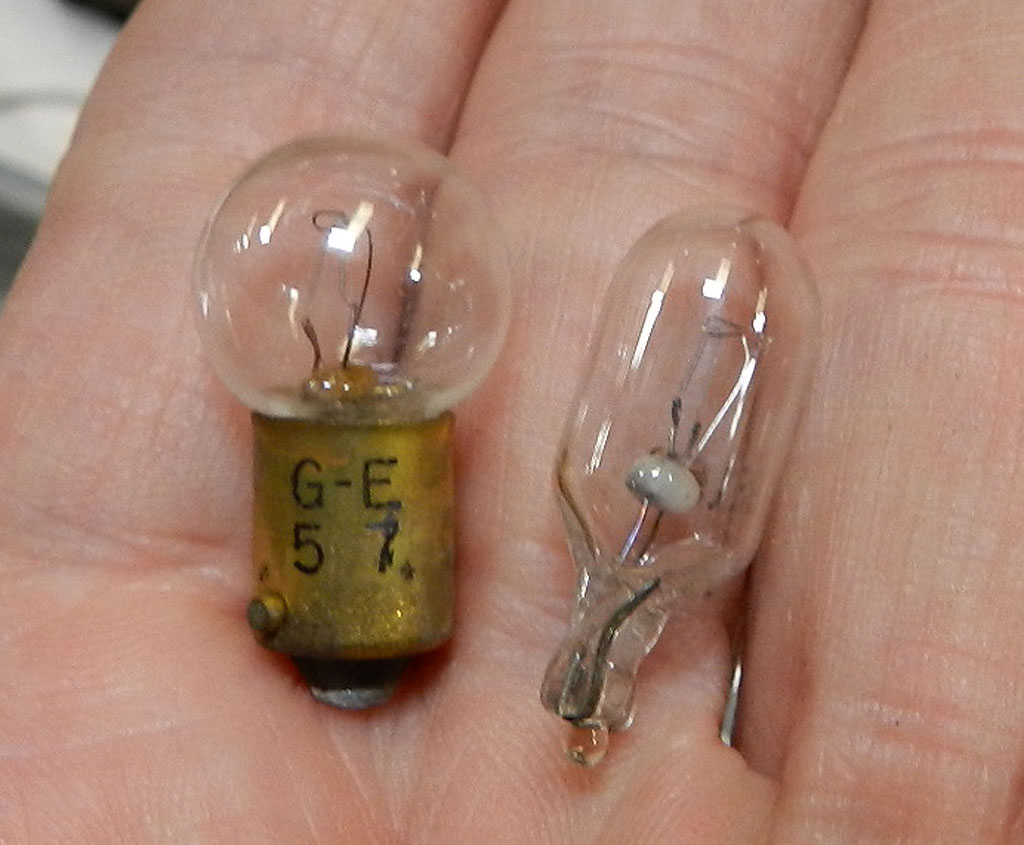
The standard lamp is the #57 with 2 CP and 3.3 Watts. The usual LED replacement is the BA9 which is 1.5W.
The BA9 has a bayonet base. Most (but not all) of the instrument panels
I came across use the bayonet base but some (and most all) of the 1964s
use the wedge base lamp.
Did you know, LEDs can be polarity sensitive. If your new LED lamp doesn't work, try rotating
it 180 degrees.
I installed new BA9 lamps and found some improvement. If you want more brightness, there are
other LEDs with 3x or 5x. There are also other LED colors.
|
|
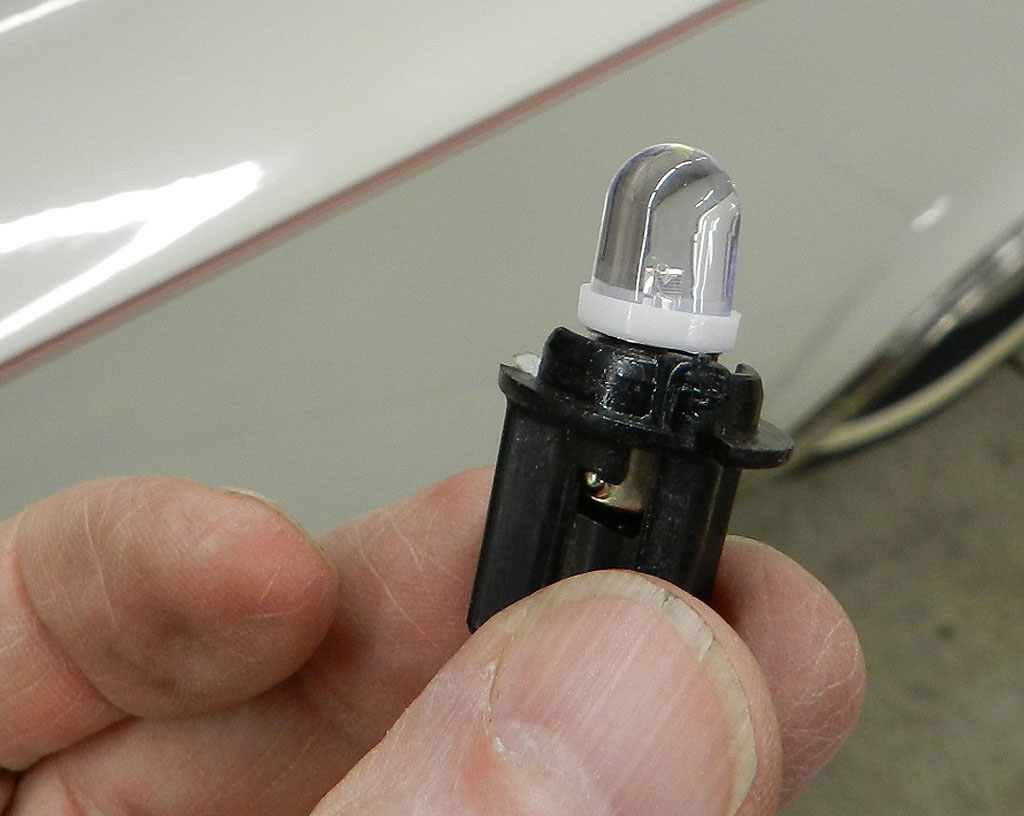
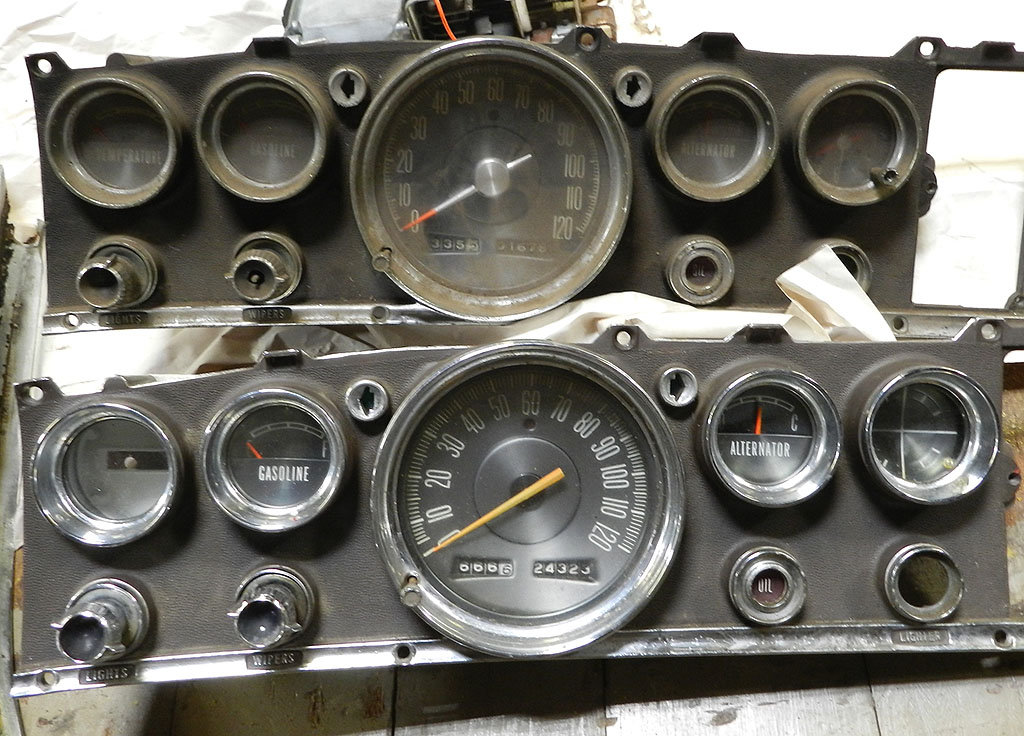
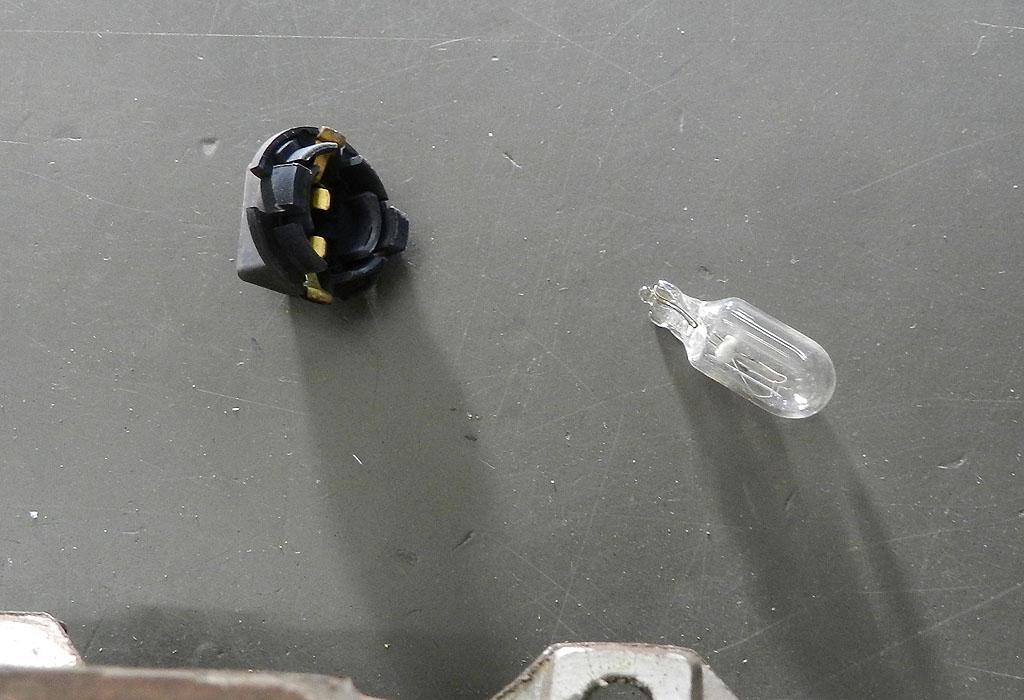
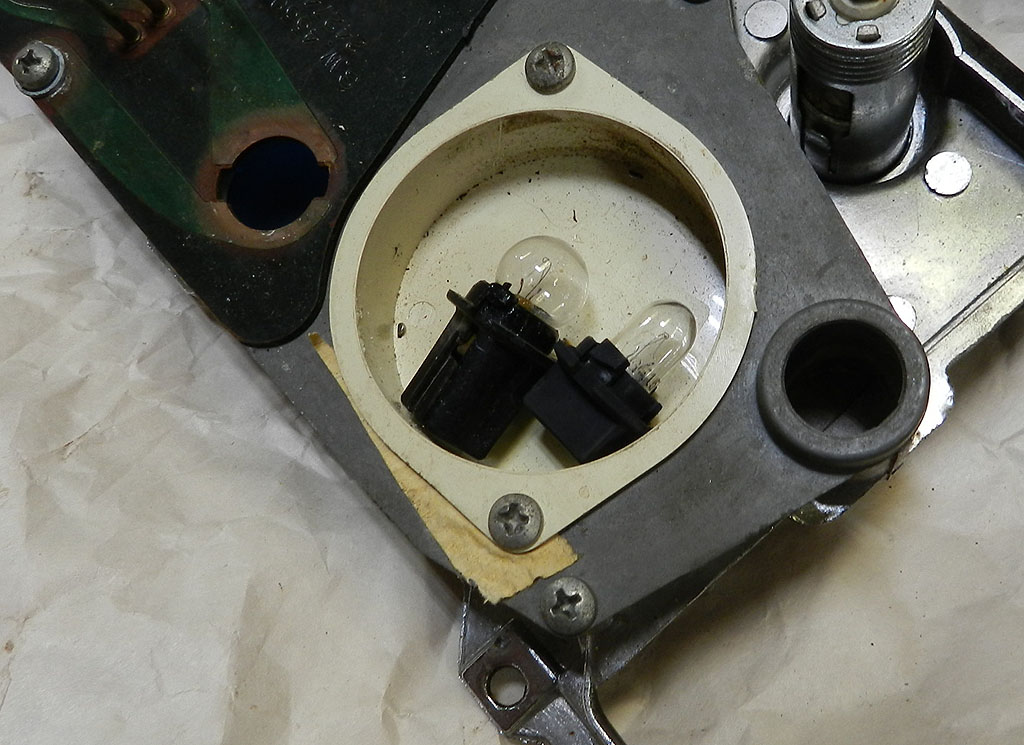
The service manuals for 63 and 64 both say lamps are #57 but do not mention bayonet or wedge base. I checked other spare dashes. Most but not all 63s are bayonet, all the 64s are wedge. You can tell at a glance which base you have -- the bayonet housing is deeper. The normal replacement LED for wedge base is a T5 or T10. The T5 draws .5W and 2 CP. The T10 draws 1W and 2-4 CP.
|
|
|
|
|
|
|
|
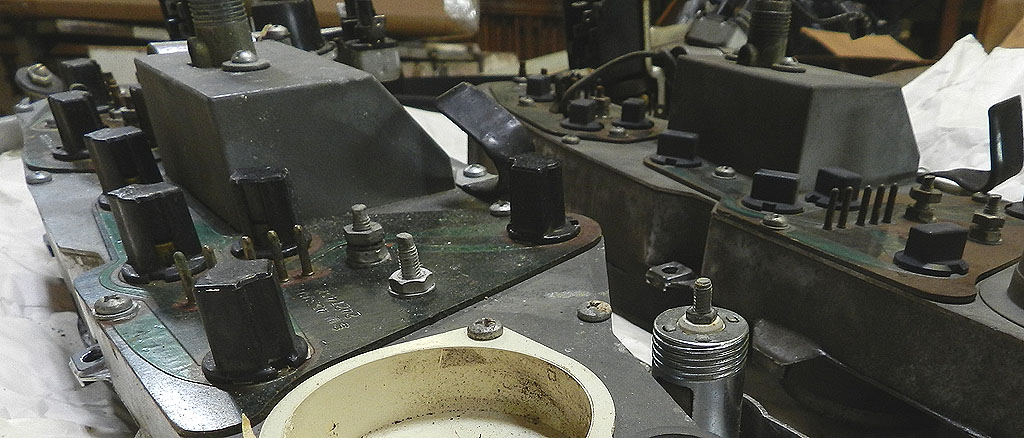
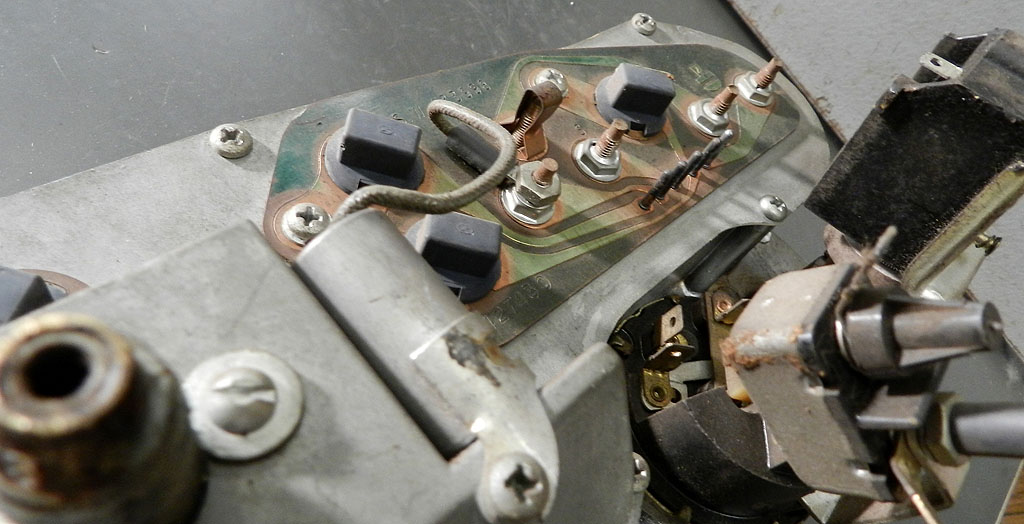
It turns out the 64 style base is much better and the good news is you can swap out the 63 style for 64. Although the contacts
on the bases are different 63 - 64, the circuit boards are the same for both years and either base will make contact. However,
the contact points on the 64 base are much better positioned than the 63 -- the 64 has full contact, the 63 has partial. See the pictures below. Maybe that is why I have unreliable lamps in the 63 dash.
Another thing I learned about the LEDs 63 vs. 64. The bayonet base LED used for the 63 has a slightly smaller body than the original lamp. The LED does not fit securely in the 63 housing -- sometimes you have contact and it works, sometimes you don't. The 64 LED has the wedge base and it fits securely in the 64 housing. It is a much more reliable lamp. We have a video here.

|

|

|

|

|

|
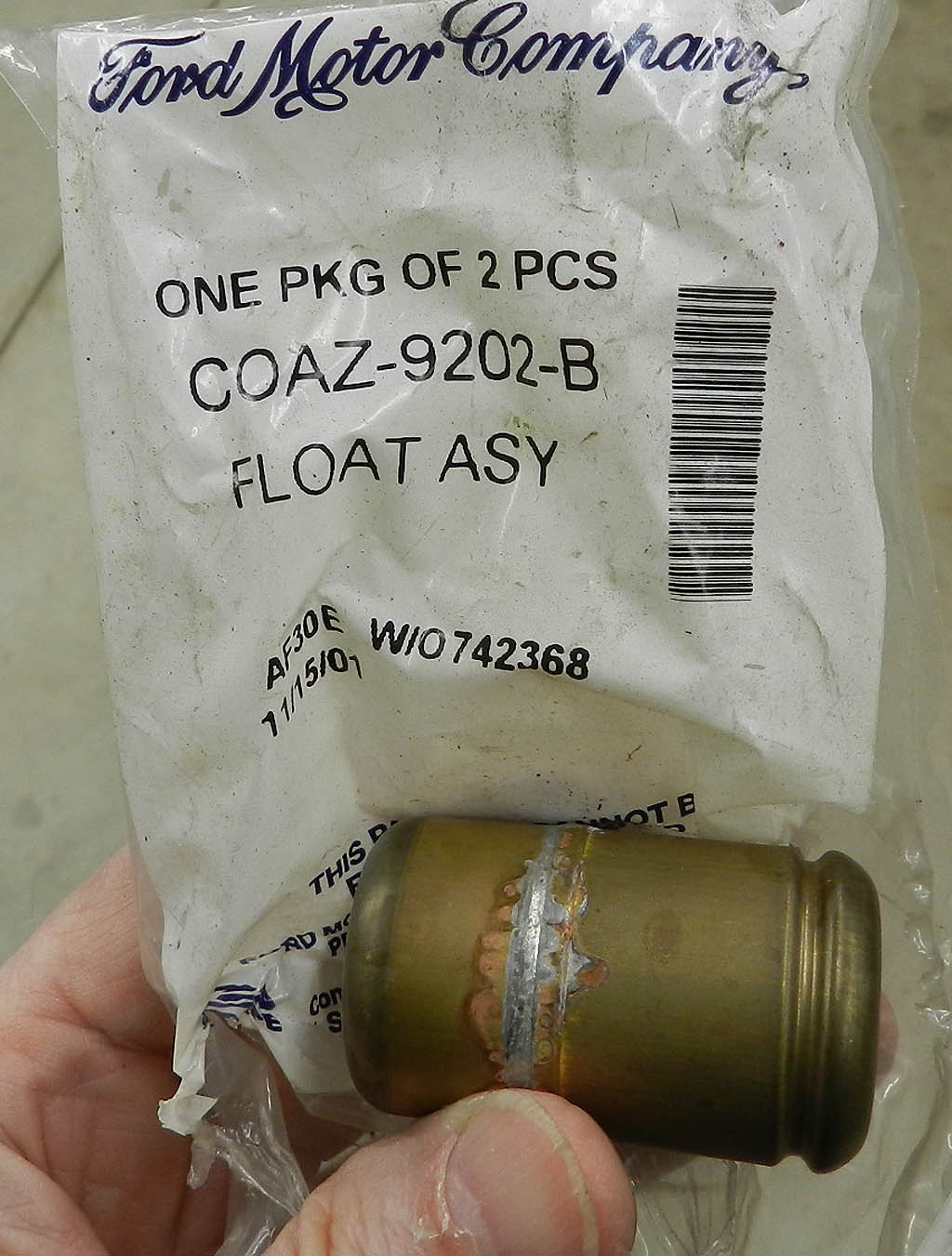
A while ago we installed a new gas tank. I noticed
the fuel gauge was not reading as high as I expected. We drained the fuel (so nice when tanks have a drain plug) and dropped the tank. Removal of the sending unit showed a cracked float. A new float (COAZ-9202) was the answer.
I wanted to check the action of the fuel gauge so I added 5 gallons. The needle moved to about 1/4. I added another 5 gallons, the needle approached 1/2. Another 5 gallons and the needle approached 3/4. This tells me the gauge is reading OK. But in the course of this, I noticed a fuel leak from the front of the tank. I knew what it was: the lock ring and gasket for the sending unit. I pumped out the fuel, removed the tank. I installed a new gasket and an original old lock ring (they seem to work better than new ones). I put a gallon or two into the tank, tipped it on its nose to check, and no fuel leaked from the sending unit. I hope I remember to do that test next time I do a sender so I won't have to pull the tank twice.
The pinion seal on the differential had a mild leak. It was nowhere as bad as the 62 we just replaced, so the differential wasn't terribly coated with fluid and dirt. I remembered my suction gun and was able to remove a lot of the differential fluid beforehand. The pinion nut came off with just the air impact and the yoke came off smoothly with the puller. A new seal, install of the yoke (again this was tight and required a block of wood and hammer to seat), 240 (minimum) ft-lbs torque on the pinion nut. I put an extension on my 1" ratchet, braced myself against the rear wheel and pushed with feet. It may not be 240 ft-lbs but it is all this fella has to offer. We have a video here.